

How to Trade Breaking News: Turning Chaos into Opportunity
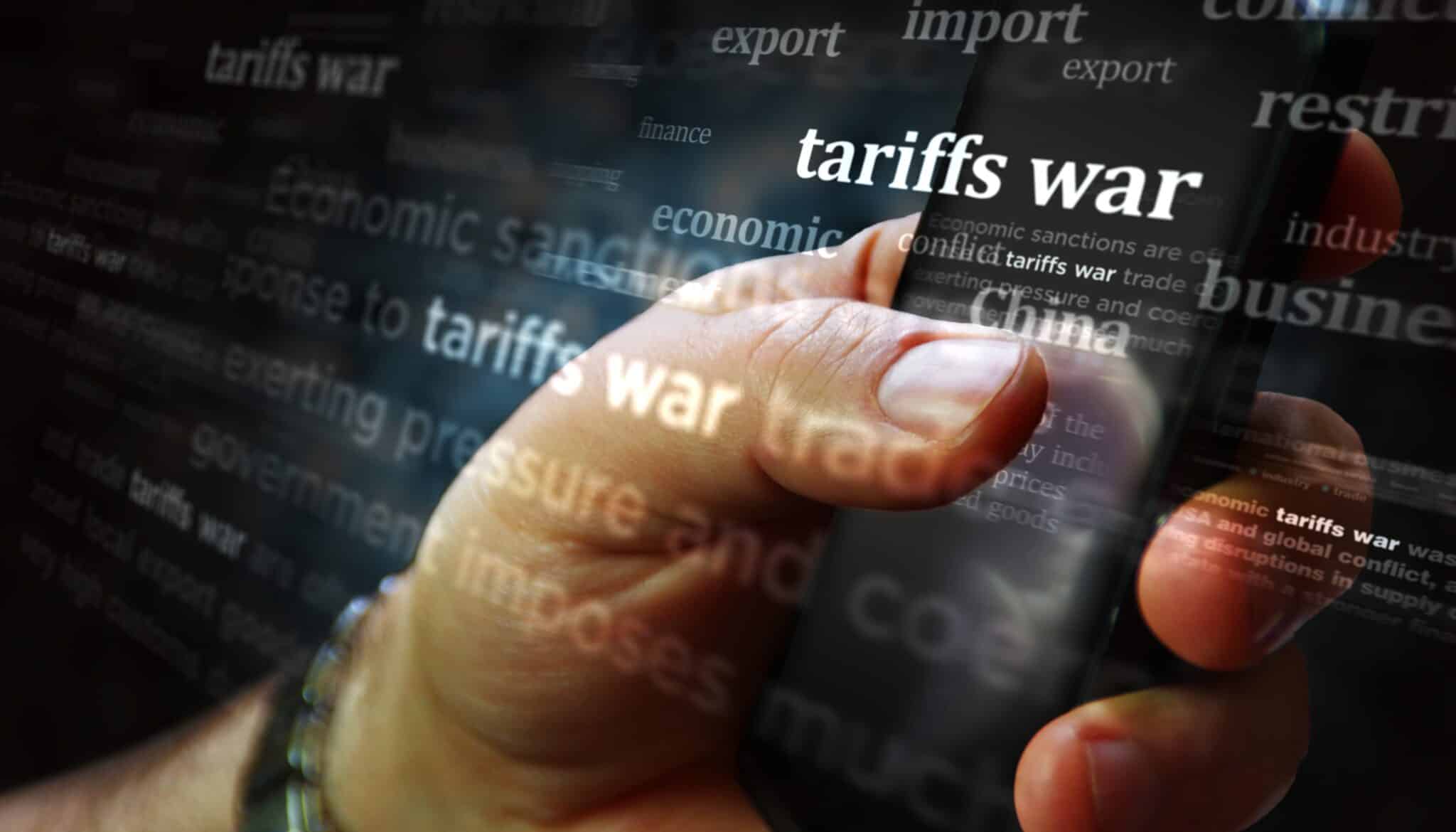
In the first months of 2026, we saw many breaking news events shaking global markets. Escalating tensions in the Middle East, surprise election outcomes and unexpected central bank shifts, reminded traders that a single headline can send prices soaring or crashing within seconds. Volatility returned with force, and those unprepared found themselves reacting emotionally instead of strategically.
Breaking news matters because financial markets typically price expectations about growth, inflation, monetary policy, corporate profits, and geopolitical stability. When new information suddenly changes those expectations, prices must adjust rapidly. For traders, this adjustment is both a risk and an opportunity.
Fortunately, chaos does not have to mean confusion. There are proven methods, structured thinking processes, and advanced tools that can help you interpret market-moving headlines objectively. With the right framework, you can transform disorder into disciplined decision-making.
In this article we break down the steps for trading breaking geopolitical news effectively.
When Breaking News Changes Everything
Financial history is full of moments where one announcement changes market direction instantly. Think of unexpected rate decisions from the Federal Reserve, emergency meetings from the European Central Bank, or geopolitical escalations involving major global powers. Prices do not wait for full analysis; they reprice immediately.
Understanding the fundamentals behind such reactions is critical. Markets respond not to the event itself, but to how that event changes future expectations. If a central bank unexpectedly signals tighter policy, traders anticipate higher yields, stronger currencies, and pressure on equities. If geopolitical tensions threaten energy supply, oil prices may spike, influencing inflation expectations worldwide.
Breaking news creates a temporary information imbalance. Some traders react emotionally, others freeze, and a few apply structured logic. The difference between panic and profit often lies in preparation. When you understand macro relationships, you are not surprised by volatility, instead, you anticipate its direction.
| Did you know Windsor Brokers’ mobile app allows you to track real-time prices, market trends, access interactive charts and receive breaking news and expert insights to stay ahead of market movements? |

Know Your Risk-Off vs Risk-On Assets
When uncertainty surges, capital flows follow recognizable patterns. Understanding these flows is essential when trading breaking news.
Risk-off assets are those investors typically seek during times of fear. The US dollar, Japanese yen, Swiss franc, gold, and short-term government bonds tend to attract capital when global stability is questioned. The United States dollar often strengthens because of its reserve status and liquidity. The Japanese yen and Swiss franc are traditionally viewed as safe havens due to their countries’ financial stability. Gold frequently benefits from geopolitical stress and inflation uncertainty.
On the other side are risk-on assets. Equities, high-beta currencies such as the Australian dollar and New Zealand dollar, emerging market currencies, and cryptocurrencies typically perform well when optimism rises and investors are comfortable taking risk.
The Energy shock logic
One of the clearest examples of this dynamic is the energy shock logic. Suppose conflict intensifies in the Middle East. Markets immediately consider the risk to oil supply. Crude prices climb due to potential shortages. Higher energy costs feed into inflation expectations globally. Central banks may feel pressured to keep interest rates higher for longer to tackle inflation. Bond yields rise, growth expectations weaken, and equity markets may retreat.
In this chain reaction, you can trace the transmission mechanism: geopolitical tension leads to supply risk, supply risk raises commodity prices, commodities influence inflation, inflation shapes monetary policy, and monetary policy affects currencies and equities. When you recognize this sequence early, you position yourself ahead of the broader market narrative.
Your 5-Question Checklist
When a major headline breaks, speed matters but clarity matters more. Instead of reacting impulsively, ask yourself five essential questions.
-
Where is the Shock?
First, where is the shock? Identify the geographic region and sector involved. A political crisis in an oil-exporting nation carries different implications than a tech regulation change in a developed economy. Location determines which assets are most directly exposed.
-
Is it supply, demand, or pure risk sentiment?
Second, is it supply, demand, or pure risk sentiment? Supply shocks often affect commodities and inflation. Demand shocks influence growth expectations. Pure risk sentiment shocks drive safe-haven flows regardless of economic fundamentals. Understanding the nature of the shock helps narrow your focus.
-
Is it likely temporary or prolonged?
Third, is it likely temporary or prolonged? Markets often overreact to short-term developments. A temporary disruption may reverse quickly once clarity returns. A structural change such as sanctions, regime change, or lasting policy shifts can create multi-month trends. Your time horizon should match the expected duration of the impact.
-
What’s the direct channel of impact?
Fourth, what is the direct transmission channel? For example, if tensions rise in a country heavily dependent on oil exports, energy markets will likely react first. If the event affects a financial hub, currency and banking stocks may move immediately. Identifying the primary channel allows you to focus on assets with the strongest linkage.
-
What’s already priced in?
Last but not least, what is already priced in? Markets anticipate risk. If tensions have been building for weeks, part of the move may have already occurred. Sometimes the most profitable trade comes not from the initial headline, but from recognizing that the market has overextended relative to realistic outcomes.
This checklist prevents emotional trading. It forces structured thinking at a moment when most participants are acting impulsively.
Mapping the Likely Winners and Losers
Once you have identified the nature of the shock, the next step is mapping potential beneficiaries and casualties. Markets rarely move uniformly. Even within equity indices, some sectors may rise while others fall.
For example, during energy supply concerns, oil producers and energy exporters may benefit while transportation and manufacturing sectors face margin pressure. In a rising rate environment, financial institutions may gain from higher interest margins while growth stocks struggle under discount rate pressure.
This stage is where the classic principle “buy the rumour, sell the news” becomes relevant. Markets often rally or decline ahead of confirmed events. When the news finally arrives, the reaction may reverse because expectations were already fully priced. Recognizing positioning and sentiment can help you avoid entering trades just as the move exhausts itself.
Breaking news trading is not about predicting headlines. It is about understanding positioning, probability, and behavioral responses. If you know where capital is likely to flow under stress, you can anticipate relative performance rather than chasing volatility.
Choose Your Timing Strategy
Even with a clear macro thesis, timing determines profitability. There are three primary approaches to trading breaking news.
Capture the Immediate Momentum
The first is short-term momentum trading, a short-term reaction strategy that closely resembles day trading. This involves entering quickly after confirmation of the headline and riding the immediate volatility burst. It requires tight risk management and fast execution because spreads can widen and reversals can be sharp. This strategy suits experienced traders comfortable with rapid decision-making.
Wait for the Retracement Advantage
The second approach is waiting for a pullback. Often, the initial reaction overshoots. Once liquidity stabilizes, prices retrace part of the move. Entering on that retracement allows for better risk-reward positioning. Patience here can significantly improve trade quality.
Follow the Broader Trend
The third approach is long-term positioning. If the event signals a structural shift such as prolonged geopolitical conflict or sustained monetary tightening, you may look to build positions aligned with the broader trend. This method requires conviction and the ability to withstand interim volatility.
Your personality, risk tolerance, and account size should guide your choice. The key is consistency. Switching strategies impulsively mid-event often leads to losses.
Confirm Your Hypothesis
No matter how logical your macro reasoning appears, confirmation remains crucial. Technical analysis can help identify whether momentum aligns with your thesis. Breakouts above key resistance or below support levels may signal continuation. Divergences, on the other hand, may warn of exhaustion.
Sentiment indicators also offer valuable insights. If positioning data shows extreme long exposure in safe-haven assets, further upside may be limited unless the situation escalates dramatically.
Professional traders increasingly use analytical tools to filter noise. Platforms offering integrated research, pattern recognition, and AI-driven insights can help validate whether market structure supports your idea.
Trading Central, for example, provides automated technical analysis, indicator-based signals, and scenario projections that help traders identify potential high-probability setups. By scanning multiple instruments and timeframes simultaneously, such tools allow traders to spot emerging trends before they become obvious. Using structured analytics alongside macro logic significantly strengthens decision-making under pressure. Confirmation does not eliminate risk but it improves probabilities.
Place Your Trade but Mind the Spread!
Volatility may involve opportunity, but it also introduces execution risk. During breaking news events, spreads may widen, slippage may increase, and margin requirements can shift. Many traders underestimate these micro-structure factors.
Entering at the wrong moment can mean paying significantly more than expected. That is why choosing a broker with stable infrastructure and transparent pricing is critical during high-impact events.
With Windsor Brokers, traders benefit from stability they can trust, keeping margins steady with dynamic leverage, reliable execution technology, and spreads from 0. In fast markets, execution quality often determines whether your strategy succeeds or fails. Access to deep liquidity and reliable order processing ensures that your macro thesis is not undermined by technical inefficiencies. Trading breaking news requires discipline not only in analysis but also in execution.
Turning Chaos into Opportunity
Breaking news will always create volatility. Markets are complex systems driven by expectations, psychology, and global interconnections. While uncertainty can trigger fear, it also generates some of the most significant trading opportunities.
By understanding fundamental transmission mechanisms, distinguishing between risk-off and risk-on flows, applying a structured five-question checklist, mapping winners and losers, selecting an appropriate timing strategy, and confirming your hypothesis with reliable tools, you transform reaction into strategy.
The difference between chaos and opportunity lies in preparation. With the right strategy and an informed approach, breaking headlines becomes less intimidating and more actionable.
In a world where information travels instantly and markets reprice within seconds, the prepared trader does not panic at the news. Instead, they analyze, confirm, execute and adapt.
Ready to turn insight into action?
Whether you’re reacting to breaking news or building long-term strategies, Windsor Brokers provides the stability, transparency, and innovation you need to trade with an advantage in every market condition.
Get started by registering a live account for free and start trading hundreds of instruments, backed by competitive spreads from 0.0 pips, dynamic leverage, advanced execution technology and powerful analytical tools that help you stay ahead of market-moving events.